The future of urban mobility took a significant leap forward as Xpeng Aeroht, the flying car subsidiary of Chinese electric vehicle giant Xpeng Motors, announced that its X3 prototype has obtained an official airworthiness certificate from the Civil Aviation Administration of China. This landmark achievement positions the company to begin mass production as early as 2025, potentially making it one of the first commercially available flying cars in the world.
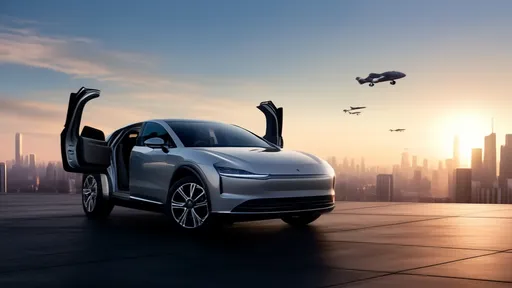
Developed after years of rigorous testing and iterations, the X3 represents a hybrid between a traditional electric vehicle and a vertical take-off and landing (VTOL) aircraft. Unlike earlier concepts that required separate runways or launchpads, the X3 is designed to transition seamlessly from road to air mode, offering unprecedented flexibility for urban commuters. The certification confirms that the vehicle meets stringent safety and performance standards required for flight operations.
Breaking New Ground in Urban Air Mobility
Xpeng's achievement comes at a time when global interest in electric vertical take-off and landing (eVTOL) vehicles is surging. Unlike many competitors focusing exclusively on air taxis, Xpeng has taken a unique approach by developing a true dual-mode vehicle. The X3 can drive on conventional roads like any electric car before transforming into a flying machine when needed. This dual functionality addresses one of the biggest challenges facing urban air mobility - the "last mile" problem of getting passengers from landing zones to their final destinations.
The airworthiness certificate specifically validates the X3's flight control systems, structural integrity, and safety mechanisms. Chinese aviation authorities conducted extensive evaluations, including hundreds of hours of test flights under various conditions. Industry analysts note that obtaining such certification for a roadable aircraft is considerably more complex than for conventional aircraft due to the additional automotive safety requirements.
Technical Specifications and Performance
While full technical details remain proprietary, Xpeng has revealed that the X3 features a distributed electric propulsion system with multiple rotors for redundancy. In flight mode, it can carry two passengers with a projected range of approximately 100 kilometers on a single charge - adequate for most urban and suburban commutes. The transition from car to aircraft reportedly takes under three minutes, with the vehicle achieving stable hover at altitudes up to 300 meters.
The cabin design focuses on simplicity and safety, with intuitive controls that allow operation by pilots with minimal training. Xpeng emphasizes that the production version will incorporate advanced autonomous flight systems to reduce pilot workload, though initial models will likely require manual control during flight operations. The company has invested heavily in noise reduction technology to address one of the major public concerns about urban air vehicles.
Regulatory Landscape and Market Readiness
Securing the airworthiness certificate represents just the first hurdle in bringing flying cars to market. Xpeng now faces the challenge of working with transportation authorities to establish operational guidelines and air traffic management protocols for urban airspace. The company has been actively participating in China's Smart Transportation initiatives, which include developing the necessary digital infrastructure to support low-altitude urban air mobility.
Market analysts suggest that Xpeng's 2025 production target aligns with projected regulatory timelines in several key markets. China has been particularly aggressive in supporting eVTOL development as part of its broader transportation modernization strategy. The country has already established several "low-altitude economic demonstration zones" where companies can test and refine urban air mobility solutions.
Competitive Landscape and Industry Implications
Xpeng's progress places it among the leaders in the race to commercialize flying cars, alongside companies like Terrafugia in the U.S. and PAL-V in Europe. However, the X3's dual-mode capability gives it a distinctive market position. Most competitors have prioritized either roadable aircraft or air taxis, but few have successfully developed a vehicle that genuinely functions well in both domains.
The automotive and aerospace industries are watching Xpeng's developments closely, as successful commercialization of the X3 could accelerate similar projects worldwide. Traditional automakers and aerospace giants have been cautiously exploring the eVTOL space, but Xpeng's aggressive timeline demonstrates what's possible when combining automotive electrification expertise with aviation innovation.
Challenges and Future Prospects
Despite the technological milestone, significant challenges remain before flying cars become commonplace. Public acceptance, infrastructure development, insurance frameworks, and pricing strategies all present hurdles that extend beyond the technical realm. Xpeng has indicated that initial production volumes will be limited, with prices likely positioning the X3 as a premium product for early adopters.
Looking ahead, Xpeng plans to establish a network of "vertiports" - specialized takeoff and landing zones - in partnership with local governments and property developers. The company envisions these as hubs for both personal flying vehicles and future air taxi services. As battery technology continues to improve, subsequent generations of the X3 are expected to offer extended range and payload capacity.
The successful certification of the X3 marks a pivotal moment in transportation history, bringing science fiction one step closer to reality. While questions remain about how quickly flying cars will integrate into daily life, Xpeng's progress suggests that the era of urban air mobility may arrive sooner than many anticipated.
By /Jun 20, 2025

By /Jun 20, 2025

By /Jun 20, 2025

By /Jun 20, 2025

By /Jun 20, 2025

By /Jun 20, 2025

By /Jun 20, 2025

By /Jun 20, 2025

By /Jun 20, 2025

By /Jun 20, 2025

By /Jun 20, 2025

By /Jun 20, 2025

By /Jun 20, 2025

By /Jun 20, 2025

By /Jun 20, 2025

By /Jun 20, 2025

By /Jun 20, 2025
