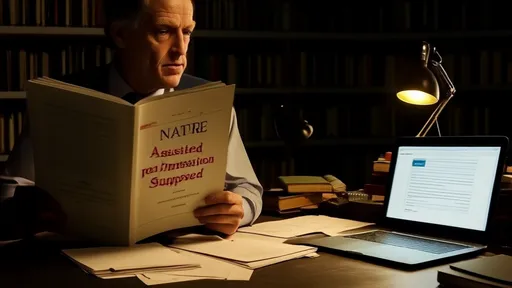
The academic world is facing an unprecedented crisis as the widespread use of advanced AI tools like ChatGPT-5 has led to a surge in fraudulent research papers. In a bold move, Nature, one of the most prestigious scientific journals, has announced a temporary halt on accepting manuscripts that acknowledge the use of AI-assisted writing or analysis. This decision has sent shockwaves through research communities, raising urgent questions about the ethical boundaries of AI in academia.
For years, AI tools have been quietly integrated into the research process, helping scientists with data analysis, literature reviews, and even preliminary drafting. However, the launch of ChatGPT-5 marked a turning point. Unlike its predecessors, this iteration produces text so sophisticated that even peer reviewers struggle to distinguish it from human writing. The line between assistance and authorship has become dangerously blurred.
The scale of the problem became apparent earlier this year when an anonymous whistleblower revealed that hundreds of papers submitted to various journals contained nearly identical methodology sections, all generated by ChatGPT-5. Subsequent investigations found entire paragraphs recycled across unrelated studies, with only minor wording changes. More alarmingly, some papers included fabricated references—nonexistent studies that the AI had convincingly invented.
Nature's editorial board first noticed anomalies in March when reviewers began flagging unusually formulaic writing styles. A retrospective analysis of recent submissions showed a 300% increase in papers acknowledging AI assistance compared to the previous year. "We're not opposed to technological progress," explained Dr. Helena Richter, Nature's Chief Editor. "But when we can't trust the authenticity of the scientific record, we have to press pause."
The suspension has divided the research community. Proponents argue that strict measures are necessary to maintain academic integrity. "This isn't about banning technology," says MIT's Professor David Chen, who studies research ethics. "It's about preventing a scenario where we can no longer verify what's real science and what's algorithmic fabrication."
Opponents counter that the move unfairly penalizes honest researchers who use AI transparently. Dr. Priya Kapoor, a materials scientist at Stanford, notes: "Many non-native English speakers rely on these tools to improve their manuscripts' clarity. Blanket bans might silence valuable contributions from developing research communities."
Behind the scenes, journal editors are grappling with technical challenges. Current plagiarism detection software fails to identify AI-generated content effectively. A Nature insider revealed that editors now manually check for telltale signs like unusual citation patterns or overly perfect grammar. However, this labor-intensive process has caused significant publication delays.
The crisis extends beyond individual papers. There are growing concerns about AI's role in systematic review articles, which synthesize existing research. Several recent meta-analyses were found to contain false conclusions because ChatGPT-5 had "hallucinated" supporting studies. Such errors could have dangerous consequences if applied to medical or policy decisions.
Universities are scrambling to respond. Harvard and Oxford have formed joint committees to develop guidelines for ethical AI use in research. Meanwhile, funding agencies like the NIH are considering requiring detailed disclosures about AI's role in grant applications. The European Research Council has gone further, proposing blacklisting researchers who fail to properly acknowledge AI contributions.
Legal experts warn that current intellectual property laws are ill-equipped to handle these challenges. If an AI system contributes substantially to a paper's content, who owns the copyright? Can AI be listed as a co-author? These unanswered questions create gray areas that dishonest researchers can exploit.
The commercial implications are equally complex. Major publishers are investing heavily in AI detection technologies, while startups offering "AI-assisted peer review" are attracting venture capital. Some predict a new arms race between increasingly sophisticated writing AIs and equally advanced detection systems.
For early-career researchers, the situation creates ethical dilemmas. "I know seniors who use ChatGPT for everything but don't declare it," confessed one postdoc who requested anonymity. "If I don't use it too, my productivity can't compete." This pressure to cut corners threatens to erode research standards across disciplines.
Nature's temporary ban is likely just the beginning. The journal plans to convene an international summit later this year with other publishers, university leaders, and AI developers. The goal: establish universal standards for disclosing and limiting AI's role in academic writing. Until then, the scientific community remains in uncharted territory.
As the debate continues, one thing is clear. The ChatGPT-5 controversy has exposed fundamental tensions between technological innovation and academic rigor. How the research world navigates this crisis will shape the future of scientific communication for decades to come. For now, all eyes remain on Nature's next move—and whether other major journals will follow its lead.

By /Jun 20, 2025

By /Jun 20, 2025

By /Jun 20, 2025

By /Jun 20, 2025

By /Jun 20, 2025

By /Jun 20, 2025

By /Jun 20, 2025

By /Jun 20, 2025

By /Jun 20, 2025

By /Jun 20, 2025

By /Jun 20, 2025

By /Jun 20, 2025
By /Jun 20, 2025

By /Jun 20, 2025

By /Jun 20, 2025

By /Jun 20, 2025

By /Jun 20, 2025
