Neuralink Unveils Second-Generation Brain Implant: A Leap Toward Seamless Mind-Machine Interaction

Jun 20, 2025 By

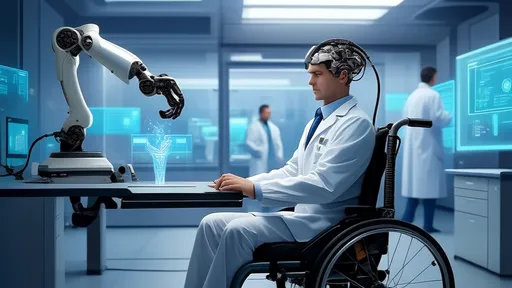
Elon Musk’s neurotechnology venture, Neuralink, has taken a monumental step forward with the release of its second-generation brain-computer interface (BCI) device. This new iteration promises not just one-way communication from brain to machine but a true bidirectional exchange—a breakthrough that could redefine how humans interact with technology, treat neurological disorders, and even augment cognitive abilities. The implications are as vast as they are revolutionary.


The first-generation Neuralink device, which garnered both excitement and skepticism, demonstrated the ability to read neural signals with remarkable precision. It allowed paralyzed individuals to control digital interfaces using their thoughts alone. However, the second-generation system goes beyond mere output—it introduces the capacity for input, enabling the brain to receive signals from external devices. This two-way street of information flow opens doors to applications previously confined to the realm of science fiction.


How It Works: The Science Behind Bidirectional BCI

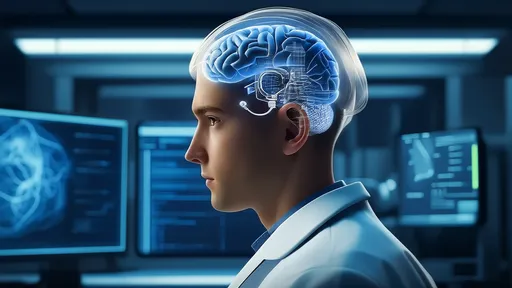
At the core of Neuralink’s new device is an array of ultra-thin, flexible electrodes implanted into the brain’s cortical tissue. These electrodes are designed to detect electrical activity from neurons with unprecedented resolution. But the real innovation lies in their ability to also deliver precise electrical stimuli back to the brain. This feedback loop mimics natural neural processes, allowing for a more integrated interaction between biological and artificial systems.


The system leverages advanced machine learning algorithms to decode neural patterns in real time. When a user thinks about moving a cursor on a screen, for instance, the implant translates that intention into action. Conversely, when the device sends sensory feedback—say, simulating the feeling of a virtual button press—the brain interprets it as if it were a genuine tactile sensation. This seamless integration is what sets the second-generation Neuralink apart from its predecessors.


Medical Breakthroughs on the Horizon

One of the most immediate and impactful applications of this technology is in the medical field. For patients with spinal cord injuries or neurodegenerative diseases like ALS, bidirectional BCI could restore not just motor function but also sensory feedback. Imagine a paralyzed individual not only controlling a robotic arm but also feeling the texture of an object it touches. This level of immersion could dramatically improve quality of life and rehabilitation outcomes.


Beyond physical disabilities, the device holds promise for treating mental health conditions. By monitoring and modulating neural activity, it could offer new avenues for addressing depression, anxiety, and PTSD. Early experiments suggest that targeted stimulation of specific brain regions can alleviate symptoms in ways traditional therapies cannot. While these applications are still in experimental stages, the potential is undeniable.


Beyond Medicine: The Future of Human-Machine Symbiosis

Neuralink’s ambitions extend far beyond healthcare. The company envisions a future where BCIs are as commonplace as smartphones, enabling direct brain-to-brain communication, instant access to information, and enhanced cognitive abilities. With bidirectional capability, users might one day "download" skills or knowledge, or even share thoughts without speaking. While this raises ethical and privacy concerns, it also presents opportunities for unprecedented human collaboration.


In the workplace, such technology could revolutionize industries by allowing workers to control machinery with their minds or receive real-time data feeds directly into their perception. Gamers could experience fully immersive virtual worlds with all five senses engaged. The line between human and machine would blur, creating what Musk describes as "a symbiosis with artificial intelligence."


Challenges and Ethical Considerations

Despite its promise, Neuralink’s second-generation implant is not without hurdles. The surgical procedure required for implantation is invasive, raising questions about safety and accessibility. Long-term effects of having foreign electrodes in the brain are still unknown, and the risk of cyberattacks targeting neural data is a growing concern. Ethicists warn of potential misuse, from unauthorized surveillance to cognitive manipulation.


Regulatory bodies are scrambling to keep pace with these advancements. Ensuring that the technology is developed and deployed responsibly will be critical. Neuralink has emphasized its commitment to working with medical and ethical experts, but as with any disruptive innovation, the path forward will require careful navigation.


The Road Ahead

Neuralink’s second-generation BCI represents a paradigm shift in how we think about the relationship between mind and machine. While widespread adoption may still be years away, the progress made so far is undeniably groundbreaking. As trials expand and technology matures, the world will be watching closely to see how this bold vision unfolds—and what it means for the future of humanity.


For now, one thing is certain: the age of bidirectional brain-computer interaction has arrived, and its impact will be felt across every facet of society. Whether it’s curing diseases, enhancing abilities, or redefining communication, Neuralink’s latest innovation is poised to change the world in ways we are only beginning to imagine.



Recommend Posts
Tech

Xpeng's Flying Car X3 Secures Airworthiness Certificate, Targets 2025 Mass Production

By /Jun 20, 2025

The future of urban mobility took a significant leap forward as Xpeng Aeroht, the flying car subsidiary of Chinese electric vehicle giant Xpeng Motors, announced that its X3 prototype has obtained an official airworthiness certificate from the Civil Aviation Administration of China. This landmark achievement positions the company to begin mass production as early as 2025, potentially making it one of the first commercially available flying cars in the world.
Tech

World's First Hyperloop Launched: Dubai to Abu Dhabi in Just 12 Minutes

By /Jun 20, 2025

The world's first operational hyperloop system has officially opened, connecting Dubai and Abu Dhabi in a mere 12 minutes—a journey that traditionally takes over an hour by car. This groundbreaking achievement marks a pivotal moment in transportation history, blending cutting-edge technology with visionary urban planning. The hyperloop, a concept once confined to science fiction, is now a tangible reality, promising to revolutionize how people and goods move between cities.
Tech

Perovskite Solar Cells Efficiency Surpasses 35%

By /Jun 20, 2025

The world of renewable energy has witnessed a groundbreaking achievement as researchers have successfully pushed the efficiency of perovskite solar cells beyond the 35% mark. This milestone represents a significant leap forward in photovoltaic technology, potentially reshaping the future of solar energy. The breakthrough comes after years of relentless experimentation and optimization, addressing some of the most persistent challenges in perovskite solar cell development.
Tech

Controlled Nuclear Fusion Breakthrough: EAST Device Achieves 800-Second Steady-State Operation

By /Jun 20, 2025

China's Experimental Advanced Superconducting Tokamak (EAST) has set a new world record by achieving steady-state plasma operation for an unprecedented 800 seconds. This milestone marks a significant leap forward in the global quest for practical nuclear fusion energy, bringing humanity one step closer to harnessing the power that fuels the stars.
Tech

Neuralink Unveils Second-Generation Brain Implant: A Leap Toward Seamless Mind-Machine Interaction

By /Jun 20, 2025

Elon Musk’s neurotechnology venture, Neuralink, has taken a monumental step forward with the release of its second-generation brain-computer interface (BCI) device. This new iteration promises not just one-way communication from brain to machine but a true bidirectional exchange—a breakthrough that could redefine how humans interact with technology, treat neurological disorders, and even augment cognitive abilities. The implications are as vast as they are revolutionary.
Tech

World's First Alzheimer's Gene Therapy Approved

By /Jun 20, 2025

In a groundbreaking development for neurological medicine, the world’s first gene therapy targeting Alzheimer’s disease has received regulatory approval. This milestone marks a turning point in the decades-long battle against the debilitating condition, offering hope to millions of patients and families affected by its progressive cognitive decline. The treatment, developed after years of meticulous research, represents a radical departure from traditional symptom-management approaches by addressing the disease at its genetic roots.
Tech

China's Chang'e 7 Lands on the Moon's South Pole: Successfully Extracts Water Ice Samples

By /Jun 20, 2025

China's Chang'e-7 lunar probe has achieved a groundbreaking milestone by successfully extracting water ice samples from the moon's south pole. This historic accomplishment not only marks a significant leap forward in lunar exploration but also strengthens humanity's understanding of the moon's resources. The mission's success has sparked global interest, as water ice could potentially support future manned missions and even serve as a resource for deep space exploration.
Tech

SpaceX's Starship Launches First Commercial Flight: 90-Minute Global Travel Service Begins

By /Jun 20, 2025

In a historic milestone for space travel and global transportation, SpaceX has successfully launched its first commercial Starship flight, marking the beginning of a revolutionary 90-minute global travel service. The long-awaited mission, which took off from Starbase in Boca Chica, Texas, demonstrated the viability of point-to-point Earth travel using reusable spacecraft—a concept once confined to science fiction.
Tech

China's Original Wukong" Quantum Computer Achieves 1024-Qubit Entanglement

By /Jun 20, 2025

China has taken a significant leap forward in the realm of quantum computing with its latest achievement—the "Origin Wukong" quantum computer successfully creating a 1024-qubit entangled state. This milestone not only solidifies China's position as a global leader in quantum technology but also opens new doors for solving complex problems that were previously deemed intractable. The breakthrough, announced by a team of researchers from the Hefei National Laboratory for Physical Sciences at the Microscale, marks a pivotal moment in the ongoing quantum race.
Tech

TSMC 1.4nm Process Mass Production: Apple A18 Pro Chip Debuts

By /Jun 20, 2025

Taiwan Semiconductor Manufacturing Company (TSMC), the world's leading semiconductor foundry, has officially announced the mass production of its cutting-edge 1.4-nanometer (nm) fabrication process. This breakthrough represents the next leap forward in chip manufacturing technology, with Apple's upcoming A18 Pro chipset expected to be the first commercial product utilizing this advanced node.
Tech

Google Unveils Project Starline 2.0: Commercializing Holographic Video Calls

By /Jun 20, 2025

Google has taken a significant leap forward in the realm of immersive communication with the launch of Project Starline 2.0, a next-generation holographic video conferencing system designed to bring lifelike interactions to businesses and consumers alike. The upgraded platform promises to revolutionize remote collaboration by eliminating the flat, two-dimensional constraints of traditional video calls, replacing them with a three-dimensional experience that makes participants feel as though they’re sitting across from each other in the same room.
Tech

GPT-5 Officially Launched: Multimodal Capabilities Surpass the Turing Test Limit

By /Jun 20, 2025

The artificial intelligence landscape has undergone a seismic shift with the commercial release of GPT-5, OpenAI's most advanced system to date. This isn't merely another incremental update in the generative AI arms race - it represents what many experts are calling the first true post-Turing test era in computing history. The system's unprecedented multi-modal capabilities have blurred the line between human and machine cognition in ways that challenge our fundamental understanding of intelligence.
Tech

Massive Academic Fraud Triggered by ChatGPT-5: Nature Journal Suspends AI-Assisted Paper Submissions"

By /Jun 20, 2025

The academic world is facing an unprecedented crisis as the widespread use of advanced AI tools like ChatGPT-5 has led to a surge in fraudulent research papers. In a bold move, Nature, one of the most prestigious scientific journals, has announced a temporary halt on accepting manuscripts that acknowledge the use of AI-assisted writing or analysis. This decision has sent shockwaves through research communities, raising urgent questions about the ethical boundaries of AI in academia.
Tech

UN Passes World's First AI Weapons Convention: Bans Autonomous Killer Robots

By /Jun 20, 2025

In a historic move that could shape the future of warfare, the United Nations has adopted the world's first international treaty banning lethal autonomous weapons systems. After nearly a decade of contentious negotiations, member states finally reached consensus on prohibiting weapons that can select and engage targets without meaningful human control. This landmark agreement represents humanity's collective effort to maintain ethical boundaries in the age of artificial intelligence.
Tech

CRISPR 3.0 Gene Editing Therapy Approved by FDA: Genetic Disease Cure Rate Increased to 89%

By /Jun 20, 2025

The medical world is buzzing with unprecedented excitement as the U.S. Food and Drug Administration (FDA) grants landmark approval to CRISPR 3.0, the latest iteration of gene-editing therapy. This revolutionary treatment has demonstrated an astonishing 89% cure rate for previously untreatable genetic disorders, marking a quantum leap in precision medicine. Unlike its predecessors, CRISPR 3.0 operates with near-surgical accuracy, rewriting faulty DNA sequences while leaving healthy cells untouched—a feat that seemed like science fiction merely a decade ago.
Tech

Neuralink's Second-Generation Brain-Computer Interface Approved for Clinical Trials: Paralyzed Patients Can Control Prosthetic Arms with Thoughts

By /Jun 20, 2025

In a groundbreaking development for neurotechnology, Neuralink has secured approval to begin clinical trials for its second-generation brain-computer interface (BCI). The company, founded by Elon Musk, aims to revolutionize the lives of paralyzed individuals by enabling them to control robotic limbs using only their thoughts. This milestone marks a significant leap forward in merging human cognition with advanced robotics.
Tech

Nokia and China’s Lunar Ambitions: The World’s First 4G Network on the Moon

By /Jun 20, 2025

In a groundbreaking leap for space exploration and telecommunications, the world’s first 4G network has been activated on the Moon. The network, powered by Nokia’s cutting-edge technology, is set to support China’s ambitious Chang’e lunar missions, including the planned construction of a lunar research base. This milestone marks a significant step toward sustainable human presence beyond Earth, with reliable communication infrastructure now in place on the lunar surface.