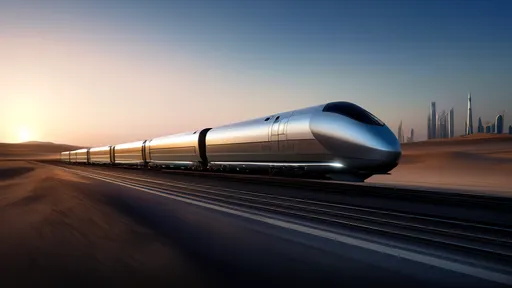
The world's first operational hyperloop system has officially opened, connecting Dubai and Abu Dhabi in a mere 12 minutes—a journey that traditionally takes over an hour by car. This groundbreaking achievement marks a pivotal moment in transportation history, blending cutting-edge technology with visionary urban planning. The hyperloop, a concept once confined to science fiction, is now a tangible reality, promising to revolutionize how people and goods move between cities.
The Dubai-Abu Dhabi hyperloop route stretches approximately 150 kilometers, with pods traveling at speeds exceeding 1,000 kilometers per hour in near-vacuum tubes. The system, developed through a collaboration between UAE government entities and leading tech firms, prioritizes safety, efficiency, and sustainability. Passengers can expect a seamless experience, with boarding procedures akin to modern airports but with far shorter wait times. The pods themselves are designed for comfort, featuring ergonomic seating, panoramic windows, and minimal noise disruption.
For the UAE, this hyperloop is more than just a transportation project—it's a strategic investment in the future. By drastically reducing travel time between its two largest economic hubs, the country aims to foster deeper integration of labor markets, tourism, and commerce. Analysts predict the hyperloop could boost GDP by enabling daily cross-city commutes and faster freight delivery. The project also aligns with the UAE's broader goals of diversifying its economy and reducing reliance on fossil fuels, as the system runs entirely on renewable energy.
Local residents have greeted the hyperloop with a mix of excitement and curiosity. "I never imagined I could attend meetings in Abu Dhabi and be back in Dubai for lunch," remarked one early rider, a sentiment echoed by many business professionals. Tourism operators are already packaging hyperloop experiences with city tours, capitalizing on the novelty factor. However, some commuters remain cautious about adopting the technology, citing concerns about pricing and frequency of service during initial rollout phases.
The engineering behind this hyperloop represents years of iterative development. Engineers overcame significant challenges in maintaining tube pressurization across desert terrain and ensuring passenger safety at unprecedented speeds. The solution involved advanced magnetic levitation (maglev) technology paired with artificial intelligence systems that constantly monitor and adjust pod movements. Emergency protocols include rapid re-pressurization mechanisms and rescue pods stationed at regular intervals along the route.
Internationally, transportation experts are closely watching the UAE's hyperloop as a test case for wider adoption. Successful operation could accelerate similar projects in progress across Asia, Europe, and North America. Critics, however, question whether the enormous infrastructure costs can be justified outside wealthy nations with specific geographic needs. The Dubai-Abu Dhabi corridor's relatively straight path and concentrated demand make it an ideal first implementation, conditions not easily replicated elsewhere.
Looking ahead, UAE officials hint at ambitious expansion plans that could see the hyperloop network extend to other Emirates and potentially connect to neighboring countries. Future phases may incorporate cargo-specific pods to transport time-sensitive goods like medical supplies. As the system matures, operators plan to increase departure frequencies from every 30 minutes to every 5 minutes during peak hours, approaching metro-like convenience at supersonic speeds.
This hyperloop inauguration coincides with Dubai's positioning as a global innovation hub ahead of hosting major international events. The timing underscores how transformative infrastructure can enhance a city's competitiveness on the world stage. While questions remain about long-term maintenance costs and public adoption curves, one fact is undeniable: the era of hyperloop travel has begun, and its first chapter is being written in the deserts of the United Arab Emirates.
By /Jun 20, 2025
By /Jun 20, 2025

By /Jun 20, 2025
By /Jun 20, 2025

By /Jun 20, 2025

By /Jun 20, 2025
By /Jun 20, 2025

By /Jun 20, 2025

By /Jun 20, 2025

By /Jun 20, 2025

By /Jun 20, 2025

By /Jun 20, 2025

By /Jun 20, 2025

By /Jun 20, 2025

By /Jun 20, 2025

By /Jun 20, 2025

By /Jun 20, 2025
