Solid-state batteries: Bridging the Valley of Death from Lab to Mass Production Line

Jun 14, 2025 By

The journey of solid-state batteries from laboratory breakthroughs to mass production has been anything but smooth. Dubbed the "Valley of Death" by industry insiders, this transition phase has claimed countless promising technologies that failed to bridge the gap between scientific innovation and commercial viability. While academic papers continue to announce record-breaking energy densities and cycle lives, the harsh realities of manufacturing scalability and cost efficiency remain formidable barriers.

Academic optimism collides with industrial pragmatism in this high-stakes race to revolutionize energy storage. University labs regularly publish findings about new solid electrolytes with unprecedented ionic conductivity or novel interface engineering techniques that prevent dendrite formation. Yet these achievements often crumble when subjected to the demands of high-volume production. The difference between making ten perfect coin cells in a controlled environment and producing millions of large-format batteries with consistent quality represents a chasm that few have successfully crossed.

Material science challenges multiply exponentially when moving from benchtop to factory floor. What appears as a minor impurity in research settings becomes a catastrophic flaw at scale. Solid electrolytes that perform exceptionally in thin-film configurations frequently prove impossible to manufacture in the thicknesses required for automotive applications. The thermal and mechanical stresses of real-world usage expose weaknesses never apparent in laboratory testing conditions.

The supply chain for solid-state batteries remains embryonic compared to established lithium-ion technologies. While conventional batteries benefit from decades of optimized material sourcing and processing infrastructure, solid-state alternatives must build their ecosystems from scratch. Specialty lithium compounds, exotic dopants, and precision solid electrolyte materials lack the mature supplier networks that could drive down costs through economies of scale.

Manufacturing know-how represents perhaps the most underestimated hurdle. The processes that work beautifully for small batches in research cleanrooms often prove wholly unsuitable for mass production. Many promising solid-state designs require fabrication techniques with intolerably low yields when attempted at scale. The absence of standardized production equipment forces each company to develop custom solutions, adding years to development timelines and burning through capital at alarming rates.

Interfacial instability between solid components continues to haunt would-be commercializers. While liquid electrolytes naturally maintain intimate contact with electrodes, solid materials develop microscopic gaps and resistances over charge cycles. These degradation mechanisms often don't manifest during the hundreds of cycles typical in academic studies but become glaring problems when targeting the thousands of cycles demanded by automotive applications.

The cost paradox presents another existential challenge. Solid-state batteries must ultimately compete on price with constantly improving lithium-ion technologies. Yet the path to cost reduction requires massive production volumes that can't be achieved without first solving the very technical challenges that require such investment. This chicken-and-egg dilemma has trapped numerous ventures in pilot purgatory - too advanced for lab funding but not sufficiently proven for production-scale financing.

Industry timelines have consistently proven optimistic, with promised commercialization dates slipping year after year. The pattern has become familiar: breathless announcements of technological breakthroughs followed by quiet postponements as engineering realities set in. This repetition has made investors increasingly wary, creating additional headwinds for companies needing substantial capital to cross the Valley of Death.

Automotive OEMs walk a tightrope between maintaining strategic positions in next-generation technology and avoiding premature commitments to unproven solutions. Most have established partnerships with multiple solid-state developers while continuing to invest heavily in incremental improvements to conventional lithium-ion. This hedging strategy reflects the high stakes involved - betting too early on the wrong technology could prove disastrous, but arriving late to a winning solution might be equally catastrophic.

The Japanese industrial approach contrasts sharply with Silicon Valley-style disruption models. Where Western startups often seek to completely reinvent battery architectures, established Japanese materials companies and automakers favor evolutionary improvements to existing manufacturing paradigms. This divergence in philosophies will likely produce very different solutions to the same fundamental challenges of solid-state commercialization.

Regulatory tailwinds may accelerate the crossing of the Valley of Death. Increasing safety concerns about conventional lithium-ion batteries, particularly regarding thermal runaway risks, could create policy advantages for inherently safer solid-state alternatives. However, such regulatory benefits will only materialize if the technology can first meet basic performance and cost thresholds - a big if given current technical hurdles.

Workforce limitations compound the challenges. The specialized knowledge required to advance solid-state batteries spans electrochemistry, materials science, mechanical engineering, and manufacturing technology. The pool of researchers and engineers with this rare combination of skills remains shallow, forcing companies to poach talent from each other and academia at premium salaries.

The ultimate shape of the solid-state battery industry remains unclear. Will it follow the semiconductor model where a few massive manufacturers dominate, or the automotive pattern with numerous competing suppliers? Current indications suggest a hybrid outcome, with deep-pocketed incumbents eventually acquiring successful startups once technologies prove viable at scale.

Success stories will likely emerge from unexpected quarters. History shows that battery breakthroughs often come from outsiders rather than established players. The organizations that ultimately commercialize solid-state batteries may be working quietly today, avoiding the hype cycle that has burned so many predecessors. Their solutions might involve compromises purists would reject - perhaps hybrid designs blending solid and liquid electrolytes or unconventional materials combinations.

The Valley of Death serves an important evolutionary purpose in technological development. While it claims many promising concepts, it also ensures that only the most robust solutions survive to commercialization. For solid-state batteries, this brutal selection process continues unabated, separating genuine innovations from laboratory curiosities. The few that emerge on the other side could reshape energy storage for decades to come.

Recommend Posts
Auto

Nano Coating Self-Healing Experiment in Paint Surface Technology

By /Jun 14, 2025

The automotive and aerospace industries have long sought solutions to maintain the pristine appearance of high-value surfaces. Among the most promising advancements in recent years is the development of self-healing nanocoatings—a breakthrough that could redefine durability and maintenance standards. These coatings, often just a few micrometers thick, leverage nanotechnology to autonomously repair minor scratches and abrasions, offering a glimpse into the future of material science.
Auto

Minimum Turning Radius: Design Considerations for Urban Navigation

By /Jun 14, 2025

The dance between urban infrastructure and vehicle maneuverability has always been a delicate one. Among the many factors that engineers and city planners must consider, minimum turning radius stands out as a critical yet often overlooked element. This unassuming measurement dictates how effortlessly a vehicle can navigate tight corners, alleyways, and complex intersections—making it the unsung hero of urban mobility.
Auto

Parametric Design: Algorithmically Generated Front Grille

By /Jun 14, 2025

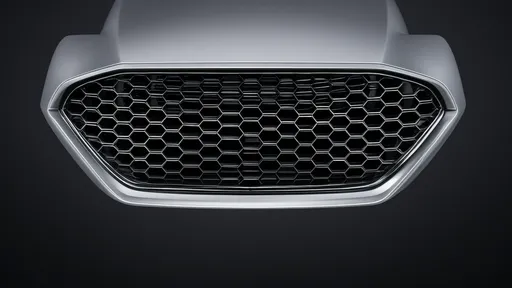
The automotive industry is undergoing a quiet revolution in design methodology, where the cold precision of algorithms meets the warm creativity of human designers. Nowhere is this more evident than in the emerging field of parametric front grille design, where computational processes are generating forms that would be nearly impossible to conceive through traditional sketching methods.
Auto

Wheel Hub Design: Balancing Aerodynamics and Aesthetics

By /Jun 14, 2025

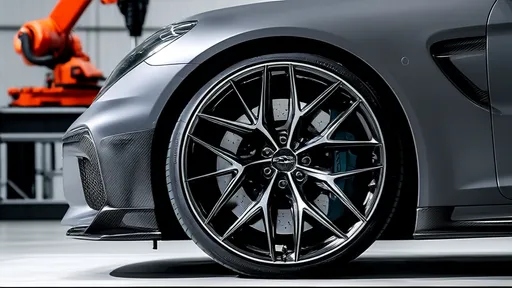
The automotive industry has long grappled with the delicate interplay between form and function, and nowhere is this tension more apparent than in wheel design. For decades, engineers and designers have engaged in a silent tug-of-war between aerodynamic efficiency and visual appeal, each pushing the boundaries of what's possible while constrained by the other's demands. This dance between airflow management and aesthetic statement continues to evolve as new materials and manufacturing techniques emerge.
Auto

Floating Roof: The Visual Magic of Two-Tone Body"

By /Jun 14, 2025

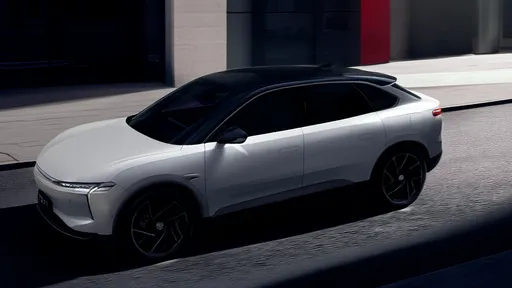
The automotive design world thrives on visual illusions, and few techniques have captured the imagination of designers and consumers alike quite like the floating roof effect. This clever styling trick, often paired with two-tone paint schemes, creates the mesmerizing impression that a vehicle's roof hovers effortlessly above its body. What began as an avant-garde design experiment has evolved into a mainstream styling phenomenon, reshaping how we perceive modern automobiles.
Auto

Hidden Door Handles: Safety Hazards of Minimalism

By /Jun 14, 2025

The rise of minimalist design in the automotive industry has brought with it a host of sleek, futuristic features—none more visually striking than the hidden door handle. Flush with the body of the car, these handles eliminate protrusions, creating smooth, uninterrupted lines that appeal to modern aesthetics. Yet, beneath their streamlined allure lies a growing concern: do these design choices compromise safety in critical moments?
Auto

Exhaust Valves: The Cat-and-Mouse Game Between Sound Waves and Environmental Protection

By /Jun 14, 2025

The roar of a high-performance engine has long been the siren song of automotive enthusiasts. From the guttural growl of a American muscle car to the piercing wail of an Italian exotic, exhaust notes have become as much a part of car culture as horsepower figures or lap times. Yet in recent years, this auditory signature has found itself at the center of an escalating conflict between automotive passion and environmental responsibility.
Auto

Reliability of Overclocking Cooling Systems in Track Mode

By /Jun 14, 2025

The pursuit of performance in track-focused vehicles has always pushed engineering boundaries, particularly when it comes to cooling systems operating under extreme conditions. As enthusiasts and professional drivers demand more from their machines, the concept of overclocking cooling systems has emerged as a critical area of innovation. Unlike traditional street applications, track mode scenarios subject components to sustained high loads, making thermal management not just an afterthought but a central pillar of reliability.
Auto

Active Wing: The Functional Relationship between Speed and Downforce

By /Jun 14, 2025

The relationship between vehicle speed and downforce in active aerodynamics represents one of the most critical balancing acts in modern automotive engineering. As speeds increase, the need for stability becomes paramount, and active rear wings have emerged as a sophisticated solution to this challenge. Unlike fixed wings, which provide a constant level of downforce regardless of velocity, active systems dynamically adjust their angle and shape to optimize performance across varying conditions. This adaptability not only enhances grip but also improves efficiency, making them indispensable in both high-performance road cars and competitive motorsports.
Auto

Torque Vectoring Control: The Black Technology for Cornering Like on a Track

By /Jun 14, 2025

In the high-stakes world of automotive engineering, torque vectoring has emerged as the unsung hero of cornering precision. This sophisticated technology, once reserved for elite supercars, is now trickling down to performance-oriented mainstream vehicles, rewriting the rules of how cars interact with the road.
Auto

Active Anti-Roll Bar: The Electronic Elimination of Cornering Roll"

By /Jun 14, 2025

The automotive world is no stranger to innovation, but few advancements have been as transformative as the rise of active anti-roll bars. These sophisticated systems represent a quantum leap in vehicle dynamics, offering a solution to one of driving's oldest challenges: body roll during cornering. Unlike their passive counterparts, active anti-roll bars don't just resist roll—they anticipate and counteract it in real time, creating what feels like a physics-defying driving experience.
Auto

Digital Chassis: The Possibility of OTA in Software-Defined Hardware"

By /Jun 14, 2025

The automotive industry is undergoing a seismic shift as vehicles evolve from mechanical marvels to software-driven platforms. At the heart of this transformation lies the concept of the digital chassis—a foundational architecture that enables software-defined hardware through Over-the-Air (OTA) updates. This paradigm is redefining how cars are designed, manufactured, and maintained, blurring the lines between hardware and software in ways previously unimaginable.
Auto

Dolby Atmos: Vehicle Adaptation for Surround Sound Systems

By /Jun 14, 2025

The automotive industry is undergoing a quiet revolution in in-car entertainment, and Dolby Atmos is at the forefront of this transformation. Once reserved for high-end home theaters and premium cinema experiences, Dolby Atmos is now making its way into vehicles, redefining what it means to enjoy audio on the go. This spatial audio technology isn’t just an upgrade—it’s a complete reimagining of how sound interacts with listeners in a confined, mobile environment.
Auto

Social Experiments with Car Exterior Interaction: Light Language and Projections

By /Jun 14, 2025

The automotive industry has long been focused on the mechanics of movement—horsepower, torque, and aerodynamics. But as vehicles become increasingly connected and autonomous, a new frontier is emerging: social interaction between cars and their surroundings. This shift has given rise to innovative communication methods, such as light-based signals and projections, which are redefining how vehicles "speak" to pedestrians, cyclists, and other drivers.
Auto

Intelligent Suspension: Millisecond-level Adjustment of Magnetorheological Damping

By /Jun 14, 2025

The automotive industry is undergoing a silent revolution beneath the wheels of modern vehicles, where magnetorheological (MR) damping technology is redefining what constitutes a smooth ride. Unlike traditional passive suspension systems that simply react to road conditions, these intelligent dampers anticipate and adapt to terrain changes with almost clairvoyant precision. At the heart of this transformation lies a mysterious fluid that transforms its viscosity in milliseconds when exposed to magnetic fields, creating what engineers poetically describe as "liquid physics defying its own nature."
Auto

Solid-state batteries: Bridging the Valley of Death from Lab to Mass Production Line

By /Jun 14, 2025

The journey of solid-state batteries from laboratory breakthroughs to mass production has been anything but smooth. Dubbed the "Valley of Death" by industry insiders, this transition phase has claimed countless promising technologies that failed to bridge the gap between scientific innovation and commercial viability. While academic papers continue to announce record-breaking energy densities and cycle lives, the harsh realities of manufacturing scalability and cost efficiency remain formidable barriers.
Auto

Sodium-Electric Two-Wheelers: An Affordable Alternative to Yadea

By /Jun 14, 2025

The electric vehicle revolution has quietly shifted gears in China's crowded two-wheeler market. While lithium-ion batteries continue dominating headlines, an unexpected challenger has emerged from sodium-ion chemistry labs - and it's being mounted on humble electric bicycles first. Yadea, China's largest e-bike manufacturer, recently unveiled its sodium battery-powered models at price points that could reshape mass-market adoption.