Nano Coating Self-Healing Experiment in Paint Surface Technology

Jun 14, 2025 By

The automotive and aerospace industries have long sought solutions to maintain the pristine appearance of high-value surfaces. Among the most promising advancements in recent years is the development of self-healing nanocoatings—a breakthrough that could redefine durability and maintenance standards. These coatings, often just a few micrometers thick, leverage nanotechnology to autonomously repair minor scratches and abrasions, offering a glimpse into the future of material science.

At the heart of this innovation lies a carefully engineered chemical composition. Traditional clear coats, while effective at providing a glossy finish, lack the ability to recover from damage. In contrast, nanocoatings incorporate dynamic molecular structures, such as supramolecular polymers or microcapsules filled with healing agents. When a scratch occurs, these materials respond to environmental triggers like heat, light, or mechanical stress, initiating a repair process at the molecular level. The result is a surface that can "heal" itself, often within minutes or hours, without any human intervention.

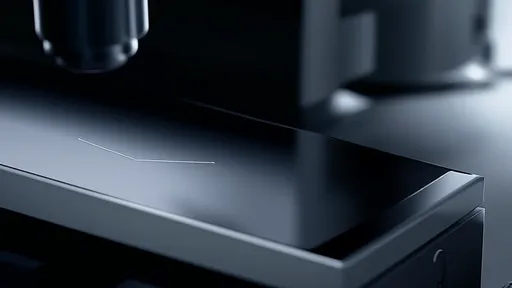
Laboratory experiments have demonstrated remarkable outcomes. In controlled settings, researchers subjected nano-coated panels to standardized scratch tests using precision instruments. Under specific conditions—typically exposure to temperatures between 60°C and 80°C—the coatings exhibited near-complete recovery. Microscopic analysis revealed that the healing mechanism involved the flow of polymer chains across damaged areas, effectively filling microscopic grooves and restoring optical clarity. This behavior was particularly pronounced in coatings containing poly(urea-formaldehyde) microcapsules, which release a healing monomer upon rupture.

Durability testing has further validated the technology's potential. Accelerated weathering trials simulating years of UV exposure and temperature cycling showed that self-healing nanocoatings retained over 90% of their initial healing efficiency. Unlike conventional coatings that degrade through microcrack propagation, these advanced formulations actually mitigate cumulative damage through continuous repair cycles. This characteristic makes them exceptionally suitable for applications where long-term performance is critical, such as aircraft fuselages or luxury vehicle exteriors.

The commercial implications are substantial. While current production costs remain higher than traditional coatings—primarily due to complex synthesis processes—industry analysts project a steep decline as scaling technologies mature. Several European automakers have already introduced limited-production vehicles featuring self-healing clear coats as premium options, with customer feedback highlighting reduced maintenance costs and sustained resale values. The marine industry, too, has taken interest, as saltwater corrosion and abrasive waves present ideal use cases for autonomous repair systems.

Beyond macroscopic scratches, nanocoatings demonstrate unexpected ancillary benefits. Their dense molecular structure inherently resists chemical etching from acid rain or bird droppings, common adversaries of conventional paints. Additionally, the same network dynamics that enable self-repair also improve impact resistance by dissipating energy more efficiently. These properties have spurred research into multifunctional coatings that combine self-healing with anti-icing or conductive capabilities.

Challenges persist in bringing this technology to mass adoption. The healing process currently requires specific thermal conditions—a limitation for outdoor applications in cold climates. Researchers are exploring alternative activation methods, including photothermal nanoparticles that convert sunlight into localized heat. Another hurdle involves achieving consistent healing performance across large, curved surfaces without compromising application thickness or optical quality. Recent advances in spray deposition techniques show promise in addressing this issue.

As material scientists continue to refine formulation chemistry and application methods, self-healing nanocoatings are poised to transition from laboratory curiosity to industrial mainstay. Their development represents not just an incremental improvement in protective coatings, but a fundamental shift in how we conceptualize material longevity. When a car can shrug off supermarket cart dings or an airplane wing heals its own surface imperfections mid-flight, the very definition of "durable" may require revision.
Recommend Posts
Auto

Nano Coating Self-Healing Experiment in Paint Surface Technology

By /Jun 14, 2025

The automotive and aerospace industries have long sought solutions to maintain the pristine appearance of high-value surfaces. Among the most promising advancements in recent years is the development of self-healing nanocoatings—a breakthrough that could redefine durability and maintenance standards. These coatings, often just a few micrometers thick, leverage nanotechnology to autonomously repair minor scratches and abrasions, offering a glimpse into the future of material science.
Auto

Minimum Turning Radius: Design Considerations for Urban Navigation

By /Jun 14, 2025

The dance between urban infrastructure and vehicle maneuverability has always been a delicate one. Among the many factors that engineers and city planners must consider, minimum turning radius stands out as a critical yet often overlooked element. This unassuming measurement dictates how effortlessly a vehicle can navigate tight corners, alleyways, and complex intersections—making it the unsung hero of urban mobility.
Auto

Parametric Design: Algorithmically Generated Front Grille

By /Jun 14, 2025

The automotive industry is undergoing a quiet revolution in design methodology, where the cold precision of algorithms meets the warm creativity of human designers. Nowhere is this more evident than in the emerging field of parametric front grille design, where computational processes are generating forms that would be nearly impossible to conceive through traditional sketching methods.
Auto

Wheel Hub Design: Balancing Aerodynamics and Aesthetics

By /Jun 14, 2025

The automotive industry has long grappled with the delicate interplay between form and function, and nowhere is this tension more apparent than in wheel design. For decades, engineers and designers have engaged in a silent tug-of-war between aerodynamic efficiency and visual appeal, each pushing the boundaries of what's possible while constrained by the other's demands. This dance between airflow management and aesthetic statement continues to evolve as new materials and manufacturing techniques emerge.
Auto

Floating Roof: The Visual Magic of Two-Tone Body"

By /Jun 14, 2025

The automotive design world thrives on visual illusions, and few techniques have captured the imagination of designers and consumers alike quite like the floating roof effect. This clever styling trick, often paired with two-tone paint schemes, creates the mesmerizing impression that a vehicle's roof hovers effortlessly above its body. What began as an avant-garde design experiment has evolved into a mainstream styling phenomenon, reshaping how we perceive modern automobiles.
Auto

Hidden Door Handles: Safety Hazards of Minimalism

By /Jun 14, 2025

The rise of minimalist design in the automotive industry has brought with it a host of sleek, futuristic features—none more visually striking than the hidden door handle. Flush with the body of the car, these handles eliminate protrusions, creating smooth, uninterrupted lines that appeal to modern aesthetics. Yet, beneath their streamlined allure lies a growing concern: do these design choices compromise safety in critical moments?
Auto

Exhaust Valves: The Cat-and-Mouse Game Between Sound Waves and Environmental Protection

By /Jun 14, 2025

The roar of a high-performance engine has long been the siren song of automotive enthusiasts. From the guttural growl of a American muscle car to the piercing wail of an Italian exotic, exhaust notes have become as much a part of car culture as horsepower figures or lap times. Yet in recent years, this auditory signature has found itself at the center of an escalating conflict between automotive passion and environmental responsibility.
Auto

Reliability of Overclocking Cooling Systems in Track Mode

By /Jun 14, 2025

The pursuit of performance in track-focused vehicles has always pushed engineering boundaries, particularly when it comes to cooling systems operating under extreme conditions. As enthusiasts and professional drivers demand more from their machines, the concept of overclocking cooling systems has emerged as a critical area of innovation. Unlike traditional street applications, track mode scenarios subject components to sustained high loads, making thermal management not just an afterthought but a central pillar of reliability.
Auto

Active Wing: The Functional Relationship between Speed and Downforce

By /Jun 14, 2025

The relationship between vehicle speed and downforce in active aerodynamics represents one of the most critical balancing acts in modern automotive engineering. As speeds increase, the need for stability becomes paramount, and active rear wings have emerged as a sophisticated solution to this challenge. Unlike fixed wings, which provide a constant level of downforce regardless of velocity, active systems dynamically adjust their angle and shape to optimize performance across varying conditions. This adaptability not only enhances grip but also improves efficiency, making them indispensable in both high-performance road cars and competitive motorsports.
Auto

Torque Vectoring Control: The Black Technology for Cornering Like on a Track

By /Jun 14, 2025

In the high-stakes world of automotive engineering, torque vectoring has emerged as the unsung hero of cornering precision. This sophisticated technology, once reserved for elite supercars, is now trickling down to performance-oriented mainstream vehicles, rewriting the rules of how cars interact with the road.
Auto

Active Anti-Roll Bar: The Electronic Elimination of Cornering Roll"

By /Jun 14, 2025

The automotive world is no stranger to innovation, but few advancements have been as transformative as the rise of active anti-roll bars. These sophisticated systems represent a quantum leap in vehicle dynamics, offering a solution to one of driving's oldest challenges: body roll during cornering. Unlike their passive counterparts, active anti-roll bars don't just resist roll—they anticipate and counteract it in real time, creating what feels like a physics-defying driving experience.
Auto

Digital Chassis: The Possibility of OTA in Software-Defined Hardware"

By /Jun 14, 2025

The automotive industry is undergoing a seismic shift as vehicles evolve from mechanical marvels to software-driven platforms. At the heart of this transformation lies the concept of the digital chassis—a foundational architecture that enables software-defined hardware through Over-the-Air (OTA) updates. This paradigm is redefining how cars are designed, manufactured, and maintained, blurring the lines between hardware and software in ways previously unimaginable.
Auto

Dolby Atmos: Vehicle Adaptation for Surround Sound Systems

By /Jun 14, 2025

The automotive industry is undergoing a quiet revolution in in-car entertainment, and Dolby Atmos is at the forefront of this transformation. Once reserved for high-end home theaters and premium cinema experiences, Dolby Atmos is now making its way into vehicles, redefining what it means to enjoy audio on the go. This spatial audio technology isn’t just an upgrade—it’s a complete reimagining of how sound interacts with listeners in a confined, mobile environment.
Auto

Social Experiments with Car Exterior Interaction: Light Language and Projections

By /Jun 14, 2025

The automotive industry has long been focused on the mechanics of movement—horsepower, torque, and aerodynamics. But as vehicles become increasingly connected and autonomous, a new frontier is emerging: social interaction between cars and their surroundings. This shift has given rise to innovative communication methods, such as light-based signals and projections, which are redefining how vehicles "speak" to pedestrians, cyclists, and other drivers.
Auto

Intelligent Suspension: Millisecond-level Adjustment of Magnetorheological Damping

By /Jun 14, 2025

The automotive industry is undergoing a silent revolution beneath the wheels of modern vehicles, where magnetorheological (MR) damping technology is redefining what constitutes a smooth ride. Unlike traditional passive suspension systems that simply react to road conditions, these intelligent dampers anticipate and adapt to terrain changes with almost clairvoyant precision. At the heart of this transformation lies a mysterious fluid that transforms its viscosity in milliseconds when exposed to magnetic fields, creating what engineers poetically describe as "liquid physics defying its own nature."
Auto

Solid-state batteries: Bridging the Valley of Death from Lab to Mass Production Line

By /Jun 14, 2025

The journey of solid-state batteries from laboratory breakthroughs to mass production has been anything but smooth. Dubbed the "Valley of Death" by industry insiders, this transition phase has claimed countless promising technologies that failed to bridge the gap between scientific innovation and commercial viability. While academic papers continue to announce record-breaking energy densities and cycle lives, the harsh realities of manufacturing scalability and cost efficiency remain formidable barriers.
Auto

Sodium-Electric Two-Wheelers: An Affordable Alternative to Yadea

By /Jun 14, 2025

The electric vehicle revolution has quietly shifted gears in China's crowded two-wheeler market. While lithium-ion batteries continue dominating headlines, an unexpected challenger has emerged from sodium-ion chemistry labs - and it's being mounted on humble electric bicycles first. Yadea, China's largest e-bike manufacturer, recently unveiled its sodium battery-powered models at price points that could reshape mass-market adoption.